Top Emerging Bay Area Neighborhoods for Real Estate Growth
Top Emerging Neighborhoods in the Bay Area for Real Estate Growth
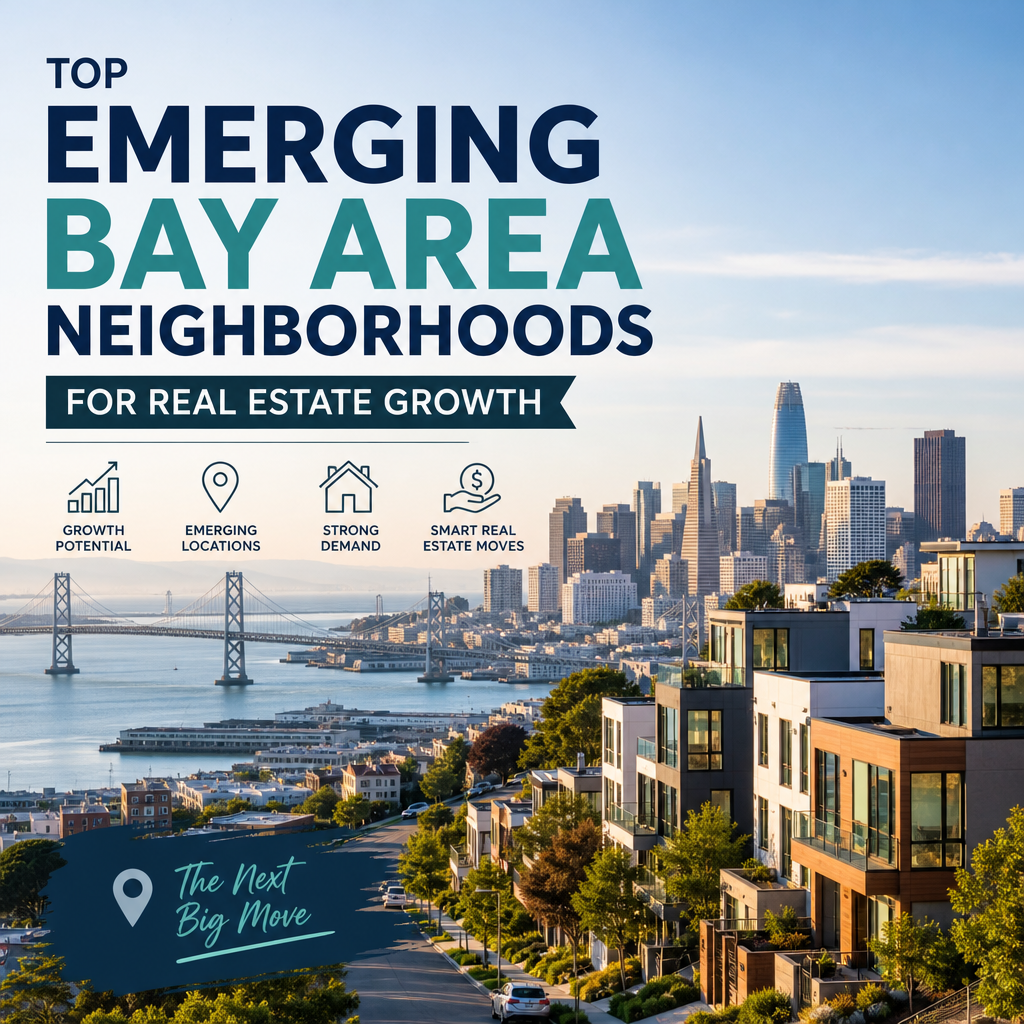
The Bay Area remains one of the most dynamic real estate markets in the United States. Although high prices and limited inventory continue to shape the region, several communities are attracting new investment, infrastructure improvements, businesses, and residents. For buyers and investors, identifying emerging neighborhoods in the Bay Area can provide opportunities before an area reaches its full potential.
Growth looks different across the region. Some neighborhoods benefit from transit expansion, while others are seeing new housing, commercial development, or revitalization efforts. Here are several locations worth watching.
West Oakland
West Oakland has gained attention for its proximity to downtown Oakland, San Francisco, and major transportation connections. The neighborhood offers relatively easier access to regional employment centers while maintaining a strong sense of community and historic character.
New residential projects, renovated industrial buildings, and improved public spaces are contributing to the area’s transformation. Its BART station provides convenient regional access, making it attractive to commuters who want urban connectivity without living directly in San Francisco.
The neighborhood still faces challenges, including concerns about affordability and uneven investment. However, its location and redevelopment potential make West Oakland one of the more closely watched areas for long-term real estate growth.
Richmond
Richmond continues to attract interest from buyers seeking more space and comparatively accessible prices than those found in many parts of the inner Bay Area. Its waterfront location, historic neighborhoods, and connection to major highways and regional transit add to its appeal.
Several parts of Richmond are experiencing improvements in housing, local businesses, and waterfront development. The city’s industrial history also provides opportunities for adaptive reuse and new commercial projects.
Investors should evaluate Richmond on a neighborhood-by-neighborhood basis. Conditions can vary significantly, and factors such as proximity to transit, employment centers, parks, and the waterfront may influence future appreciation.
Vallejo
Vallejo is emerging as an option for buyers priced out of more expensive Bay Area markets. Located between the East Bay and Sacramento region, the city offers waterfront access, historic architecture, and a growing network of local businesses.
Its ferry service to San Francisco is an important transportation advantage, particularly for commuters who prefer an alternative to driving. Vallejo also has potential for revitalization through downtown improvements, residential redevelopment, and renewed interest in mixed-use projects.
While the city may offer greater affordability, buyers should carefully research commute times, neighborhood conditions, local services, and the timeline of planned developments before making a purchase.
Downtown San Jose and the Diridon Area
San Jose remains a major technology and employment hub, and the area surrounding downtown and Diridon Station is positioned for substantial long-term change. Planned and ongoing investments in transit, housing, offices, retail, and public spaces are helping create a more connected urban district.
The Diridon area is especially significant because it is expected to serve as a central transportation hub. Improved rail and transit connections could strengthen demand for nearby housing and commercial properties.
New development may also bring higher density and greater walkability. However, prospective buyers should consider construction timelines, changing traffic patterns, and the potential impact of large-scale projects on nearby neighborhoods.
Oakland’s Fruitvale District
Fruitvale is known for its cultural identity, transit access, and strong local business community. The neighborhood’s BART station and transit-oriented development have supported greater interest in apartments, retail, and mixed-use properties.
Community-focused planning has played an important role in Fruitvale’s growth. New housing and public improvements are being developed alongside efforts to preserve local character and support existing residents.
For real estate buyers, Fruitvale may offer opportunities connected to transit-oriented living. As with other emerging neighborhoods in the Bay Area, it is important to examine the balance between new investment, affordability, and community preservation.
South San Francisco
South San Francisco has evolved beyond its traditional industrial identity. The city’s biotechnology and life sciences sector continues to draw employers, workers, and investment, creating demand for housing and supporting businesses.
Its location near San Francisco, the Peninsula, major highways, and transit makes it attractive to professionals who want access to regional job centers. New residential and commercial projects are also contributing to a more diverse local economy.
Neighborhoods near employment hubs and transportation corridors may be especially well positioned for future demand. Still, buyers should compare property prices carefully, as South San Francisco is already more expensive than many East Bay and North Bay alternatives.
What to Consider Before Investing
Real estate growth is never guaranteed, and neighborhood momentum can take years to develop. Before purchasing, consider:
- Planned transit and infrastructure projects
- Local zoning and development policies
- Employment growth and major employers
- School quality and public services
- Rental demand and vacancy trends
- Property taxes, insurance, and maintenance costs
- Current pricing compared with nearby communities
The strongest opportunities often combine accessibility, new investment, employment growth, and a sustainable community identity. By researching local conditions instead of relying only on broad market trends, buyers can make more informed decisions in the Bay Area’s evolving real estate landscape.