

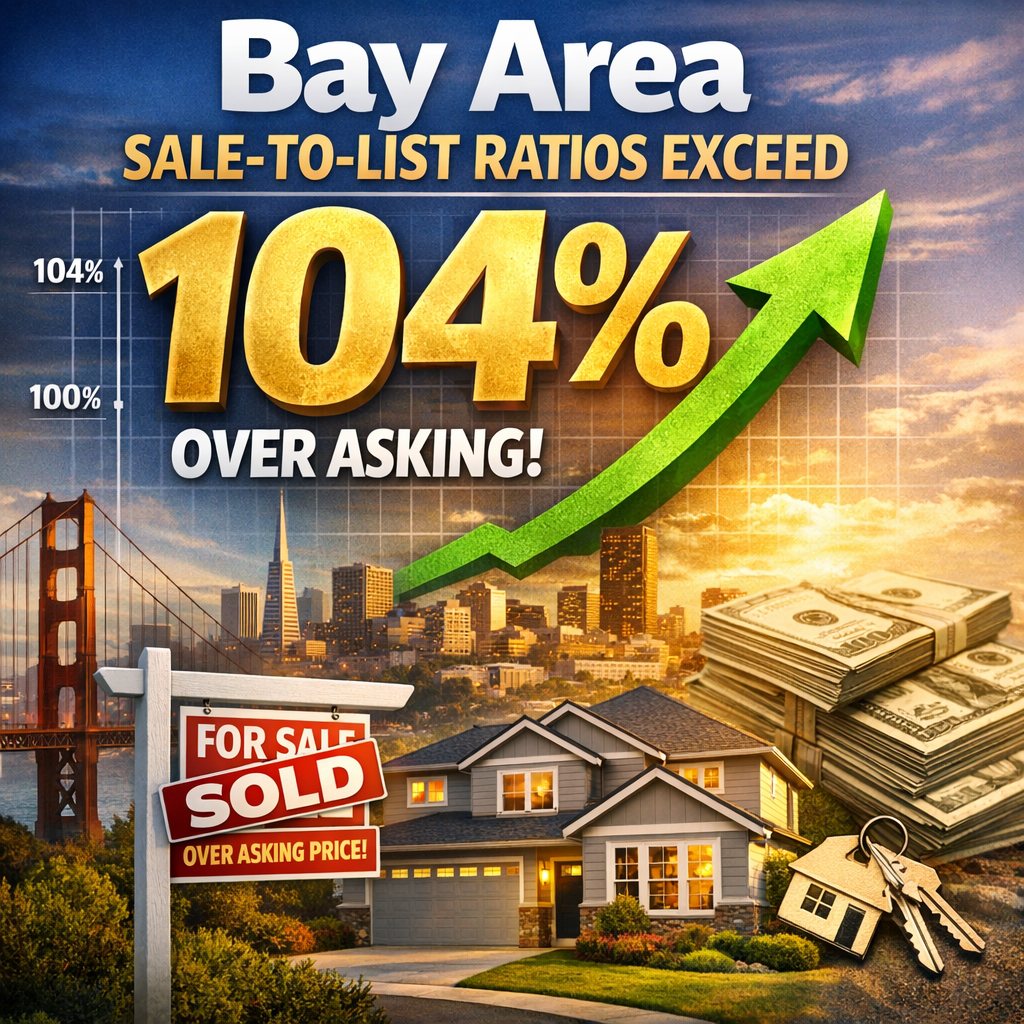
Bay Area Home Sale-to-List Ratios Exceed 104% Over Asking
Sale-to-List Ratios Explained: Why Bay Area Sellers Are Averaging 104% Over Asking
The Bay Area’s real estate market has always been dynamic, but recent trends are spotlighting a particularly intriguing statistic: homes selling for an average of 104% of their list price. This phenomenon, reflected in the sale-to-list ratio, speaks volumes about the current housing scenario in this tech-rich region. Let’s dive into what this means for both buyers and sellers and explore the forces at play behind these numbers.
Understanding Sale-to-List Ratio
Sale-to-list ratio is a key metric used in the real estate industry to gauge market demand. It’s calculated by dividing the final sale price by the original list price, then expressing the result as a percentage. A ratio over 100% indicates that homes are selling for more than their asking price, a common occurrence in highly competitive markets.
Why It Matters
For sellers, a high sale-to-list ratio can signify a strong seller’s market, where there are more buyers than available properties. Buyers, on the other hand, can use this ratio to understand how much above the asking price they may need to offer to secure a property in competitive areas.
Factors Driving the Bay Area’s High Sale-to-List Ratios
Several key factors contribute to the robust sale-to-list ratios experienced in the Bay Area:
1. Intense Demand
Tech Industry Influence: The presence of major tech companies continues to attract workers to the area, sustaining a high demand for housing. The lucrative job market makes it easier for these workers to afford higher-priced homes, pushing up property values.
Limited Housing Supply: There’s a notable scarcity of available properties in the Bay Area, a long-standing issue exacerbated by zoning laws and geographical constraints that limit new construction.
2. Competitive Bidding Wars
In many cases, homes in the Bay Area receive multiple offers, often within days of listing. This competition naturally drives up the final sale prices.
3. Strategic Pricing by Sellers
Sellers and their agents often set the list price slightly below market value to create a buzz and attract more buyers. This strategy typically results in higher final sale prices as buyers compete against each other.
Implications for Buyers
Navigating a market where homes routinely sell for more than their listed price can be daunting for potential homebuyers. Here are a few tips:
- Expect to Pay Above List Price: Budget for this reality to avoid getting edged out in bidding wars.
- Get Pre-Approved for a Mortgage: This shows sellers that you are serious and can move quickly.
- Act Fast: Be prepared to make quick decisions in such a fast-paced market.
Implications for Sellers
For sellers in the Bay Area, the current market is largely favorable. However, there are still strategies to maximize returns:
- Consider the Best Time to Sell: Research the best season to put your home on the market to maximize exposure and potential offers.
- Set the Right List Price: Even in a seller’s market, the right pricing strategy is crucial and can significantly affect the final sale price.
Conclusion
The Bay Area real estate market shows no signs of cooling down, with homes selling for more than 104% of the list price on average. This high sale-to-list ratio is a clear indicator of the vigorous demand and competitive nature of this market. Both buyers and sellers need to stay informed and strategic to navigate this complex landscape successfully. Whether you’re looking to buy a home or considering selling one, understanding the nuances of the sale-to-list ratio will provide valuable insights into the dynamics of the Bay Area’s real estate market.