

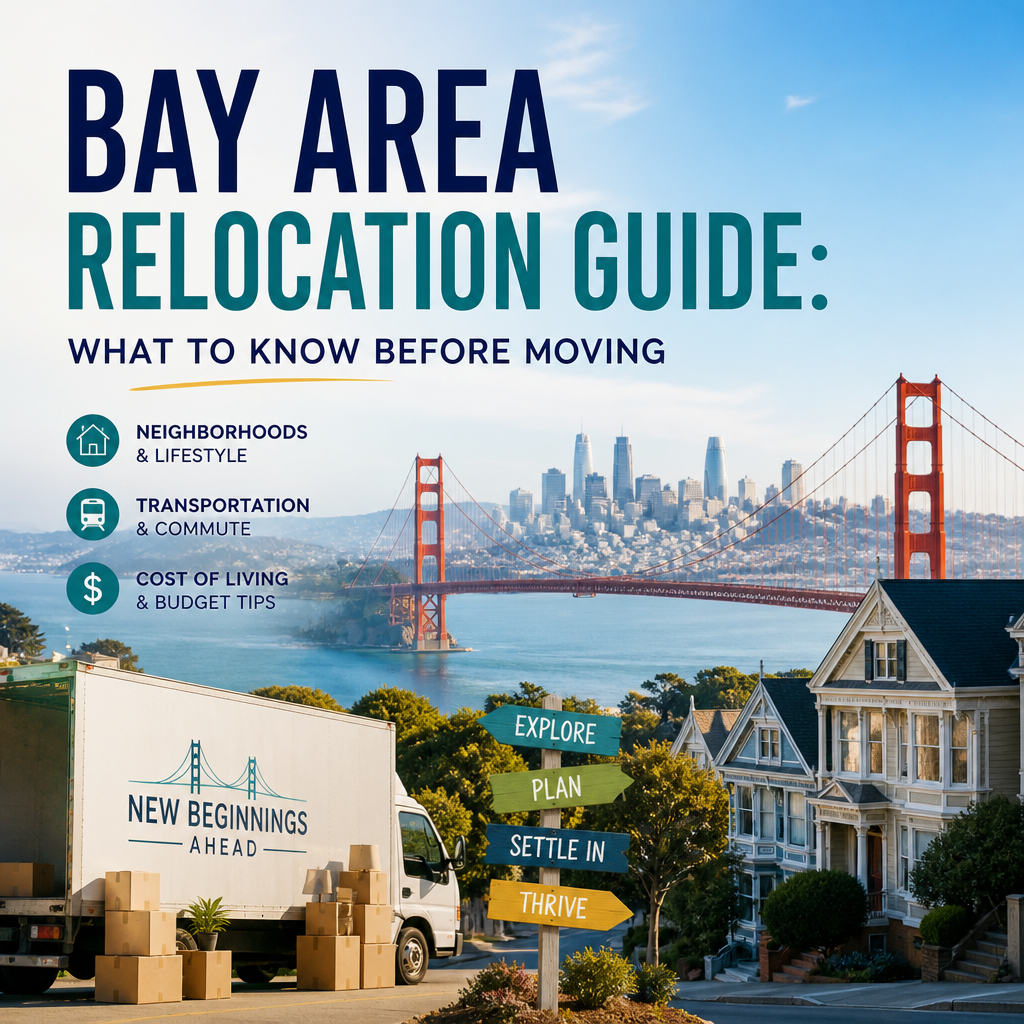
Bay Area Relocation Guide: What to Know Before Moving
Bay Area Relocation Guide: Everything You Need Before Moving Here
Moving to the Bay Area can be an exciting opportunity, whether you are starting a new job, attending school, or looking for a change of scenery. The region offers diverse communities, strong career opportunities, excellent food, and access to beaches, forests, and vibrant cultural attractions. However, relocating here also requires careful planning because housing costs, commuting patterns, and neighborhood lifestyles can vary significantly.
This Bay Area relocation guide covers the essentials to help you prepare for a smoother move.
Understand the Bay Area Region
The Bay Area is made up of several distinct counties and communities, each with its own personality. The best place for you will depend on your budget, commute, lifestyle, and priorities.
San Francisco
San Francisco is known for its walkable neighborhoods, historic architecture, public transportation, restaurants, and cultural attractions. Popular areas include the Mission, Noe Valley, Inner Sunset, Marina District, and Richmond District. Space is often limited, and housing costs are among the highest in the region.
East Bay
Oakland, Berkeley, Alameda, and surrounding communities offer a wide range of housing options, restaurants, parks, and cultural activities. Many residents choose the East Bay for its relatively spacious homes and access to BART, though commute times can vary.
Peninsula and South Bay
The Peninsula includes cities such as Daly City, San Mateo, and Redwood City, while the South Bay includes San Jose, Sunnyvale, Mountain View, and Santa Clara. These areas are popular with technology professionals and families. They often provide more suburban amenities, but housing prices can be especially high near major employment centers.
North Bay
Marin County, including San Rafael and nearby communities, offers beautiful scenery, outdoor recreation, and a quieter atmosphere. Commutes into San Francisco may be longer and typically rely on bridges, ferries, or buses.
Create a Realistic Housing Budget
Housing should be one of your first considerations. Rent and home prices can differ dramatically even between neighboring cities. Before choosing a neighborhood, calculate your total monthly expenses, including:
- Rent or mortgage payments
- Utilities and internet
- Parking or transportation
- Renter’s or homeowner’s insurance
- Groceries and dining
- Childcare or school expenses
- Taxes and other recurring costs
Many landlords require strong credit, proof of income, references, and a security deposit. In competitive areas, desirable rentals may receive applications quickly, so prepare your documents in advance. Consider temporary housing if you need time to explore neighborhoods in person before signing a long-term lease.
Plan Your Commute Carefully
Traffic is a major part of daily life in the Bay Area. A commute that looks short on a map can take much longer during peak hours, particularly near bridges, freeways, and major employment hubs.
Before moving, research:
- Your expected commute during morning and evening rush hours
- BART, Caltrain, Muni, AC Transit, SamTrans, and ferry routes
- Parking availability and monthly garage costs
- Bicycle lanes and pedestrian access
- Employer shuttle services or remote-work policies
Living near public transportation can reduce stress and transportation expenses. However, proximity to transit may also affect rent, noise levels, and neighborhood activity.
Prepare for the Local Climate
The Bay Area has a mild climate, but weather conditions differ by location. San Francisco can be cool, foggy, and windy, while inland communities such as Walnut Creek and San Jose tend to experience warmer summers. Coastal areas may require layers throughout the year.
Pack clothing that can adapt to changing conditions:
- Light jackets and sweaters
- Comfortable walking shoes
- Rain gear for winter
- Sun protection for warmer inland areas
- Layers for cool evenings
The region can also experience wildfire smoke during certain seasons. Check local air-quality alerts and learn how to keep indoor air cleaner when needed.
Research Neighborhood Lifestyle
A neighborhood’s atmosphere can be just as important as its price. Think about what you want nearby, such as grocery stores, parks, schools, gyms, restaurants, or nightlife.
Families may prioritize school districts, quiet streets, and outdoor space. Young professionals might prefer walkability, public transportation, and access to restaurants or entertainment. Others may value a larger home, a shorter commute, or proximity to hiking trails.
Whenever possible, visit prospective neighborhoods at different times of day. A quiet afternoon may feel very different during rush hour or on a weekend evening.
Handle Moving Logistics Early
Start organizing your move several weeks in advance. Reserve professional movers or a rental truck early, especially during summer and at the beginning or end of the month. Confirm building rules for elevator reservations, loading zones, parking permits, and move-in hours.
You should also update:
- Your mailing address
- Driver’s license and vehicle registration
- Banking and insurance records
- Medical and dental providers
- School or employment information
- Utility and internet services
Decluttering before the move can reduce transportation costs and make settling in easier.
Build Your New Community
The Bay Area is home to people from many backgrounds, making it relatively easy to find communities connected to your interests. Join local groups, attend neighborhood events, explore farmers markets, and try activities such as hiking, volunteering, or recreational sports.
Moving may require patience, especially while you adjust to the cost of living and pace of life. With thoughtful planning and an open mind, you can find a Bay Area community that feels like home.
